2025 Printable Template
This website is not affiliated with any government agency or tax authority.
Form last updated: 03/2024. Please verify this is the current version before use.
Easily complete & submit your 709 form
Follow these simple steps to fill, sign, and send your 709 form online.
Fill out your form
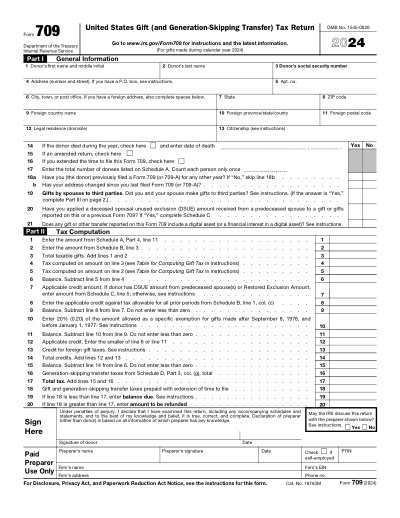
Our user-friendly editor helps you quickly enter personal & business details in the 709 template.
Sign the form
Add your electronic signature to the fillable 709 form to certify it came directly from you.
Send it to the requester
Download and instantly print or share your signed 709 with the requester.
How to fill out a 709 online?
Follow these steps to complete your 709 form online.
Step 01
Access the form in the PDF editor without uploading anything.
Step 02
Enter your personal information accurately.
Step 03
Detail the gifts given during the year, noting recipients and values.
Step 04
Include information on any generation-skipping transfers.
Step 05
Calculate any deductions or exclusions if relevant.
Step 06
Review the tax computation section for potential gift tax owed.
What is a 709 used for?
Who needs to fill out a 709 form
What is the purpose of Form 709?
When is Form 709 due?
Who is exempt from filing Form 709?
Ready to Fill Your Form 709?
Start filling out your form online in minutes. Fast, secure, and completely free.
Our users speak for themselves
Exceptional quality verified by real professionals.
"The editing was very easy and easy to download the document."
Fouzia Barwari
Jun 2, 2026
"Quick easy and straightforward thank you"
MRS DAWN ANDREWS
May 23, 2026
"Simple efficient process. It all worked."
Sundeep Salins
Jun 3, 2026
"Editing was easy. I changed some text in the file without affecting the original font or page layout"
Bhagya
May 14, 2026
Frequently Asked Questions
What is PDFocused?
Is PDFocused safe to use?
Is PDFocused subscription-based or a one-time purchase?
How do I edit a PDF on PDFocused?
What core features does PDFocused include?
What file types does PDFocused support?
What should I do if I run into an error?
How do I choose the right online PDF tool?